

 EN
Property Taxes in the Dominican Republic in 2026: IPI and Transfer Costs Explained
 by Wiso
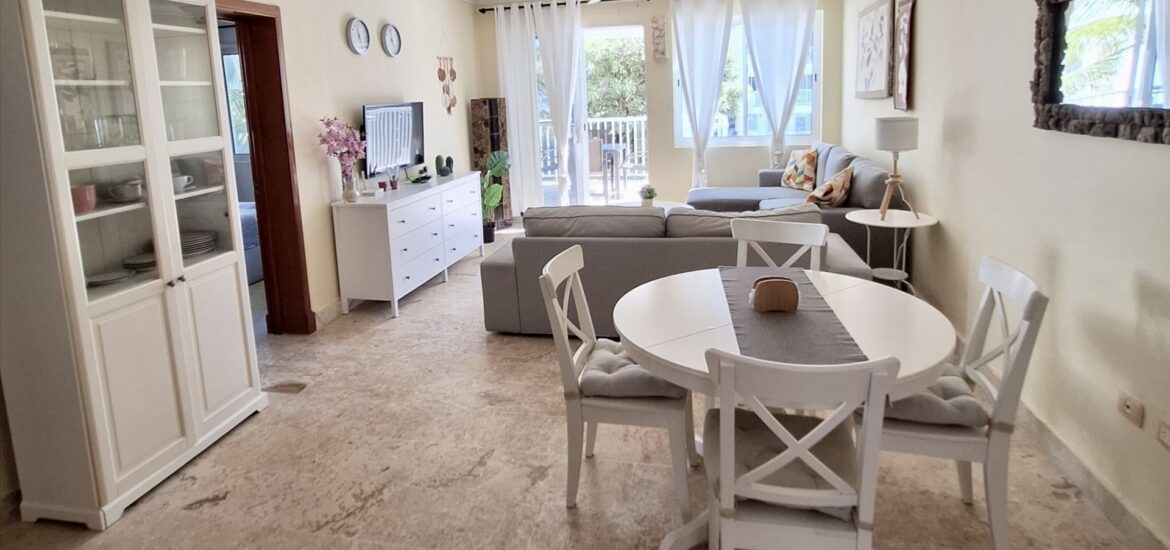
Property taxes Dominican Republic buyers meet include transfer costs at closing and the annual IPI—two different bills that both affect ownership.
This article is for general information only and is not tax, legal, or financial advice. The figures below are the ones DGII has published for 2026. A specific file can differ. Have a Dominican tax adviser and a lawyer read the deed, the title, and any incentive the seller mentions.
Property taxes Dominican Republic: IPI and transfer costs
The transfer tax is a transaction tax. It is tied to an act that moves the property. The Impuesto al Patrimonio Inmobiliario, usually called IPI, is an annual tax on the stock of property a person or a trust already holds. Paying one does not pay the other. A home can generate a transfer bill at closing and an IPI bill in later years, or a transfer bill and no IPI, depending on the owner’s total holdings and on exemptions.
The transfer tax, and why it is not always a flat 3 percent of the asking price
Law 288-04, as amended by Law 173-07 and as DGII restates it, applies a unified tax of 3 percent of the value of the property to real-estate transfers. The tax is payable within six months from the moment the transfer is perfected. After that window, surcharges and interest can apply. DGII’s help article CA4215, which the help community shows as updated, tells taxpayers to use the official calculator, to enter the commercial appraisal (the tasación comercial), and to treat the calculator’s result as an estimate that should be confirmed with the appraisal area of a DGII office. The listing price is not that appraisal.
DGII’s published service sheet also lists a separate RD$20 charge under Law 33-91. Use the statute, the service sheet, and the calculator together. Do not treat the brochure price as the tax base.
- The calculator result is an estimate. CA4215 says to confirm it with DGII’s appraisal area.
- If the six-month period has already run, CA4215 points to surcharges and interest under article 252 of the Tax Code. The bill is then no longer the original 3 percent alone.
- Norma General 03-2024, issued on 28 November 2024, says that when the transfer procedure determines an income-tax obligation for capital gain, that gain is calculated under article 289 of the Tax Code. A transfer file can therefore include more than the 3 percent.
- The same norma says that, until the property is discharged from the seller’s name, IPI (or the asset tax, where it applies) remains demandable from the person in whose name the property is registered. Ask whether that tax is current before you rely on a clean closing.
- A project that advertises a tourism incentive has to show the act that grants it. DGII’s IPI page cites special laws, including Law 158-01, as examples of exemptions from IPI. In tourism sales conversations, that citation is often expanded into a shorthand about multi-year relief—commonly a 15-year narrative covering IPI and, separately, talk of transfer-tax relief on the ordinary 3% path. None of that shorthand replaces the project’s Confotur act or DGII’s reading of your deed. That page is not, by itself, a statement that the transfer tax disappears.
The practical step is to ask DGII’s calculator and your adviser for the bill on this deed, and to ask whether any earlier act in the chain is still unpaid. The title check and the tax check are the same purchase, not two optional extras.
IPI in 2026: threshold, rate, and reach
IPI is the annual wealth tax on taxable real-estate holdings registered to individuals and trusts. DGII publishes the exemption threshold and rate for the tax year—verify the current circular before you model cash flow. Paying transfer tax at closing does not prepay IPI.
DGII lists exemptions and special laws, including examples under Law 158-01. Tourism sales often translate that into a 15-year IPI narrative alongside talk of relief on the ordinary 3% transfer tax. Treat those as document claims: collect the Confotur act and counsel’s closing memo (incentive case vs ordinary case).
Exemptions DGII actually lists
Use DGII’s published IPI exemption list as a checklist, not a promise. Owner type, registered value, and special-law coverage must match your file. If a seller cites Confotur, attach the resolution—do not rely on a brochure paraphrase.
What to add up before you sign
- Transfer tax: ordinary 3% path vs documented Confotur relief.
- First-year IPI outlook after any proven exemption.
- Notary, registration, and association move-in costs.
- HOA, reserves, and east-coast utilities (often CEPM)—separate from DGII taxes.
Only shortlist assets that still clear after that sheet. Compare candidates on the WISO Clave properties directory.
A calm way to use the numbers
Build a closing sheet with transfer tax (ordinary vs documented Confotur case), first-year IPI outlook, notary/registration, and association move-in costs. Then buy only if the sheet still clears after counsel reviews the deed.
Sources and data
- DGII, resolution DDG-AR1-2026-00001, exempt IPI amount for individuals in 2026 of RD$10,695,494: resolution PDF.
- DGII, IPI page: 1 percent above that amount for individuals, 1 percent of taxable value for trusts, installments due 11 March and 11 September, return in the first 60 days, and the exemption list: Impuesto al Patrimonio Inmobiliario.
- Law 288-04 as amended by Law 173-07, unified 3 percent of the property value, payable within six months, as restated in DGII Norma General 03-2024 of 28 November 2024: Norma General 03-2024. Articles 12 and 13 of that norma cover IPI until discharge, and capital gain when the transfer procedure determines it.
Imagery & Architectural Visualizations:
Architectural renderings, project photography, and master plans are presented for illustrative and editorial purposes. All rights and copyrights remain with their respective developers, architects, and creators. For image attribution or inquiries: legal@wiso.do