
 ES
ESPunta Cana Real Estate in 2026: What the Numbers Actually Tell Us
 by Wiso
Punta Cana is often described as if it were a single property market with a single direction. The public numbers do not support that shortcut. What they do show, clearly, is that the eastern Dominican Republic sits inside a national economy where tourism and real-estate development are both receiving foreign capital, and where visitor spending in the first half of 2026 was stronger than a year earlier.
That is useful context for anyone comparing homes, condominiums, or land in Punta Cana, Bávaro, or elsewhere in La Altagracia. It is not a forecast of what a particular unit will be worth, and it is not a rental-yield promise. The disciplined reading is narrower: understand the backdrop, then underwrite the property in front of you.
What the Banco Central reported for the first half of 2026
According to preliminary figures from the Banco Central de la República Dominicana, foreign direct investment reached US$3,276.5 million in January–June 2026. That was US$233.4 million, or 7.7 percent, above the same period of 2025.
The sector split matters more than the headline. Tourism accounted for 20.1 percent of that investment. Real-estate development accounted for 12.4 percent. The central bank has noted that real-estate investment is relevant in this mix especially because its expansion is closely tied to tourism growth. Read that as a description of how two national sectors move together, not as evidence that every building in Punta Cana will appreciate.
The same communiqué reported tourism revenue of US$6,716.0 million for January–June 2026, US$891.2 million or 15.3 percent above the first half of 2025. Visitor arrivals in that period rose 7.9 percent and exceeded 6.5 million. These are national totals. They include every gateway and every type of trip, not only leisure stays on the east coast.
A full-year marker from 2024
The half-year 2026 figures should not be mixed with older annual totals as if they were the same snapshot. For the last full year covered by ProDominicana’s published investment material, the picture is still large, and it is a different period.
ProDominicana’s investment guide records total foreign direct investment of US$4,523.2 million in 2024. A May 2025 ProDominicana infographic on 2024 FDI lists the real-estate sector at US$798.3 million for that year. Use those as 2024 facts. Do not treat them as the 2026 run-rate, and do not subtract them from the January–June 2026 total.
Where Punta Cana sits in the country, not just in the brochures
The destination name “Punta Cana” is a market label. The census geography is a province and a set of municipalities and districts. The 2022 National Population and Housing Census, published by the Oficina Nacional de Estadística, counted 446,060 people in La Altagracia province. That figure is from the census taken in November 2022, with later coverage adjustment. It is not a 2026 population estimate.
ONE also enumerates Verón-Punta Cana as a municipal district. Buyers who treat “Punta Cana,” “Bávaro,” and “Verón” as interchangeable names are mixing a resort brand, a beach corridor, and an administrative district. Those places share an airport economy and a provincial government. They do not share one price, one building type, or one buyer. Listings currently grouped by CLAVE for the province are a practical place to see that spread: browse properties and then narrow by area rather than assuming the provincial name is the product.
What the data tells us
Three readings are fair.
First, foreign capital is still arriving, and tourism plus real-estate development are a meaningful part of it. In the first half of 2026 those two categories together were 32.5 percent of reported FDI, using the central bank’s own sector shares. That is a reason the east-coast property market exists at this scale. It is also a reason the market is exposed to travel demand, airlift, and the pace of new projects.
Second, visitor spending grew faster than a simple “more people arrived” story. Arrivals were up 7.9 percent year over year in January–June 2026, while tourism revenue was up 15.3 percent. Revenue and headcount are different measures. A buyer of a short-stay apartment cares about both, and about whether the extra spending shows up in the specific building’s occupancy, which these national series do not reveal.
Third, La Altagracia is a populated province, not an empty resort island. The 2022 census count of 446,060 people is a reminder that housing demand here is not only foreign second homes. Local residents, workers in the visitor economy, and non-resident owners are different clients. A property that suits one of them can be a poor fit for the others.
What the data does not tell us
It does not tell us the sale price of a condominium in Bávaro, the occupancy of a rental pool, or the cost of maintaining a villa. The Banco Central does not publish a Punta Cana house-price index in the communiqué cited here. Anyone who turns US$6,716 million of national tourism revenue into a personal return is inventing a step the statistics do not contain.
It does not say that prices will rise. Investment inflows and visitor growth can coincide with oversupply in a particular project. New rooms and new apartments are part of how tourism investment shows up. More supply can support the destination and still pressure the resale price of an individual unit.
It does not replace title, tax, or building diligence. National FDI is silent on whether a specific certificado de título is clear, whether association fees are sustainable, or whether a rental program is even allowed. Those questions belong in a purchase file, not in a macroeconomic paragraph.
How to use this as a buyer
Treat the 2026 half-year figures as the current national backdrop, label the 2024 FDI amounts as a prior full year, and label the census as 2022. Then move to the property. Compare location inside La Altagracia, the delivery status of the project, the ongoing costs, and your own hold period. If the numbers on the unit are thin, the strength of the national story is not a substitute.
CLAVE publishes east-coast listings so that comparison can start from actual homes rather than from a slogan. Two companion notes go further into how Punta Cana, Bávaro, and Verón differ and into why tourism growth is not the same thing as appreciation. If you want a second set of eyes on which questions to ask before an offer, contact the team. The market context is encouraging for people who are willing to read it carefully. It is not a guarantee.
Sources and data
- Banco Central de la República Dominicana, preliminary FDI and tourism results for January–June 2026: official note.
- ProDominicana, investment guide (2024 total FDI of US$4,523.2 million): Guía de Inversión.
- ProDominicana, May 2025 infographic on 2024 FDI, real estate US$798.3 million: 2024 FDI infographic.
- Oficina Nacional de Estadística, X Censo Nacional de Población y Vivienda 2022, La Altagracia population 446,060: Informe General.
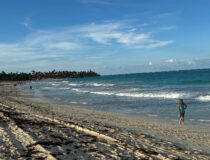
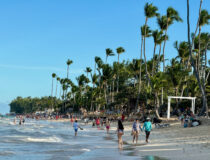
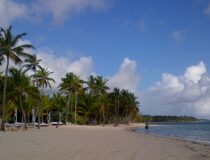
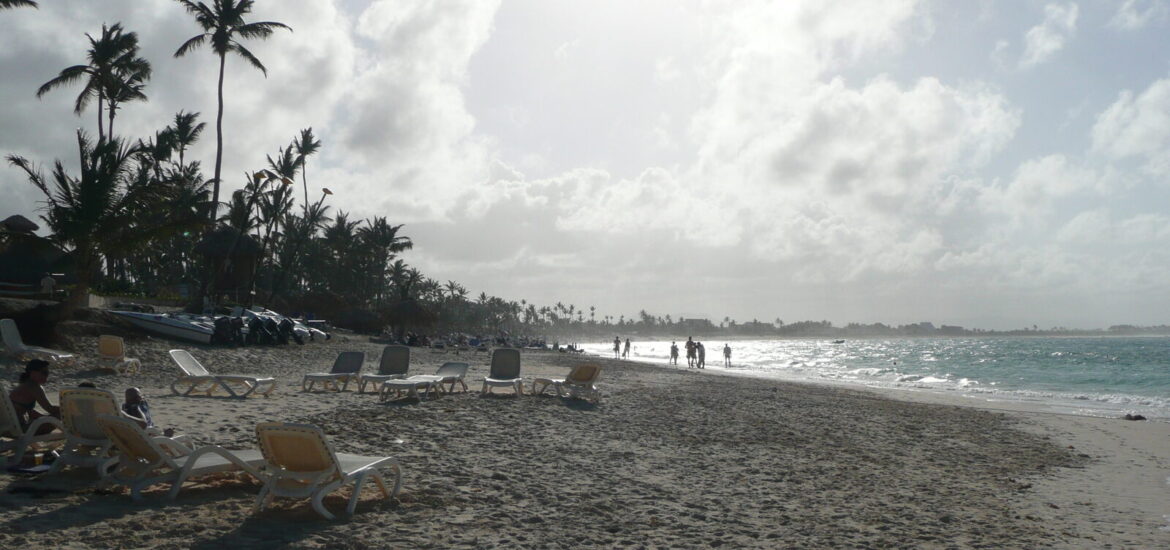
Photograph: coastline at Punta Cana by CT Cooper, public domain, via Wikimedia Commons.