
 ES
ESWhy Tourism Matters to Punta Cana Real Estate — and What Property Buyers Should Watch
 by Wiso

Tourism is the reason a large share of east-coast property exists in its current form. Hotels, beaches, and housing were built for people who arrive by air and stay for a week, a winter, or a few years. That link is real. It is not a formula in which more visitors automatically mean a higher price for your apartment.
The useful version of the idea is narrower. Watch the visitor economy because it shapes demand and new supply in La Altagracia. Judge the property on its own price, costs, and rules. Tourism growth is not guaranteed property appreciation.
What the first half of 2026 showed
Preliminary figures from the Banco Central de la República Dominicana put tourism revenue at US$6,716.0 million in January–June 2026. That was US$891.2 million, or 15.3 percent, above the first half of 2025. Visitor arrivals in the same period increased 7.9 percent and passed 6.5 million.
Revenue rose faster than arrivals. That can mean visitors spent more, stayed in a different mix of lodging, or both. A national series cannot tell you which. An owner of a short-stay home should care, because a destination can grow while a particular building’s calendar does not.
On the investment side of the same half-year, tourism took 20.1 percent of foreign direct investment and real-estate development took 12.4 percent, out of US$3,276.5 million in total FDI. The central bank has tied the relevance of real-estate investment to the growth of tourism. Again, that is a national relationship between two sectors. It describes why projects get financed. It does not appraise unit 4B.
Why the east coast feels this more than a national average
Punta Cana and Bávaro are leisure places. Their housing stock includes homes meant for owners and homes meant for guests, often in the same condominium. When national arrivals and tourism revenue move, this coast is one of the places where the movement is visible: in flights, in beach clubs, and in the pipeline of new residences.
Visibility is not the same as a local statistic. The Banco Central note cited here is for the Dominican Republic as a whole. It does not isolate Punta Cana airport, and this article will not pretend that it does. What a buyer can say, honestly, is that a large visitor economy is the setting for the east-coast market, and that La Altagracia is also a place where people live. The 2022 census counted 446,060 residents in the province. Workers, residents, and non-resident owners are all part of housing demand. Tourism is the distinctive piece, not the only piece.
What an owner can actually monitor
Once a year, or each half-year when the central bank publishes, look at three national series and label the period: visitor arrivals, tourism revenue, and the share of foreign investment going to tourism and to real-estate development. A break in those series is a reason to revisit assumptions. It is not, by itself, a reason to sell or to buy.
Then look at the building. How many similar units are listed for sale or for rent? What does the association spend, and is the reserve funded? Are guest rules stable? Is the beach access you were promised still the access guests can use? Those facts move the value of one property when the national totals do not.
For a prior full year, rather than the 2026 half-year, ProDominicana’s material puts 2024 real-estate foreign investment at US$798.3 million, against US$4,523.2 million of total FDI that year. Keep that date on the number. It shows that real estate was already a large investment category before the latest half-year. It is not a trend line you can extend with a ruler.
Supply is the part investors skip
Tourism investment does not only fill existing homes. It builds new ones. A stronger visitor season can arrive in the same year as a large delivery of apartments. Owners then compete with new product. That is why “tourism is growing” and “my resale price is safe” are different sentences. The first can be true, on the evidence above, while the second depends on how much comparable housing is for sale around you.
This is also why a home you use yourself is a different economic object from a home that must cash-flow. Personal use still has a cost. It does not require the national arrival number to hit a target every January.
A motivating conclusion that stays inside the evidence
The Dominican visitor economy, in the first half of 2026, was larger in revenue than a year earlier, and foreign investors were still funding tourism and real-estate development. For people who want a long relationship with Punta Cana, Bávaro, and the rest of La Altagracia, that is a serious backdrop. It rewards buyers who pick a use, pay a price that survives a quiet season, and keep reading both the national releases and their own building.
It does not reward a story in which the country’s tourism revenue is treated as a personal return. If you want the boundaries of the statistics, start with what the 2026 numbers actually tell us. If you want to see how different the coast is from one area to the next, read the geography of Punta Cana, Bávaro, and Verón. Homes now on the market are here.
Sources and data
- Banco Central, preliminary January–June 2026 FDI, tourism share, real-estate share, tourism revenue, and visitor arrivals: official note.
- ProDominicana investment guide, 2024 total FDI US$4,523.2 million: Guía de Inversión.
- ProDominicana, May 2025 infographic, 2024 real-estate FDI US$798.3 million: 2024 FDI infographic.
- Oficina Nacional de Estadística, 2022 census, La Altagracia 446,060: Informe General.
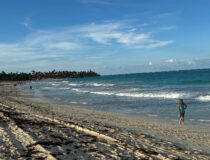
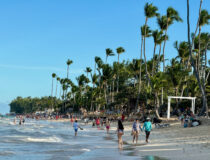
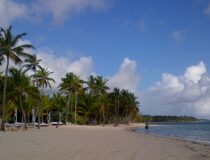
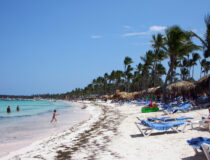
Photograph: shore at Playa Bávaro by Oleg Yunakov, CC BY-SA 4.0, via Wikimedia Commons. Resized for web display; license unchanged.